EDSI's Jim Bitterle Featured on Project HR Podcast
Listen to this podcast for additional insight into the topic of succession planning, including how it can help you “hire for the future.”


Expertise
Think about this: you are an expert in your particular business and have collected vast amounts of knowledge and expertise within your industry. This knowledge enables you to do things faster, better, and more effectively than others can. So it makes sense that it would take several years for someone without that expertise to attain a similar level of aptitude. With all the responsibilities and pressures of running a business, you don’t need to feel pressured to become a succession planning expert because succession planning consultants do this work on a regular basis and have already learned through successes and failures, what works and what doesn’t. Trust the experts to guide you through this process.

Proven Assessment Methodology
Besides expertise, one of the most valuable things a succession planning consultant delivers is time, knowledge and resources, and one such resource is a good assessment program. The goal of the assessment program is to identify the knowledge, skills and abilities that need development to better prepare candidates for a future position. An easy way to do this is to use success profiles for each position that describe what is expected and what knowledge, skills and abilities are necessary to be successful in that role.
A consultant brings proven, measurable strategies for identifying high-potential candidates through a clearly defined methodology. While tailoring their approach to specific client needs, consulting firms base assessment processes on extensive research and experience that shows what makes a successful leader. They can clearly show how their approach delivers a positive return on investment (ROI) and measure success according to specific performance metrics.

Objectivity, Timeliness & Perspective
Without a strong perception of an organization’s structure and goals, succession planning is destined to fail. An outside consultant brings objectivity by offering an unbiased perspective.
Consultants bring the expertise and proven systems necessary to implement change quickly and smoothly. Whether it’s a struggle to assess candidates effectively or there’s no clear idea of what is needed from leadership positions, or if selling the business is best, you can save time and money by bringing in a skilled consultant to evaluate operations instead of spending time and resources trying to do it yourself.
Succession Planning is not a “one size fits all” undertaking. While many companies may hesitate to bring on an outside consultant, the benefits far outweigh the drawbacks, especially in terms of knowledge, capability and strategic perspective. A reputable consulting firm can have a game-changing effect on the whole succession planning process.

ROI
Instead of asking the cost of succession planning services, you should be asking “What is the cost of NOT implementing a professional succession planning program?” The best way to determine your SP metrics is to identify what you want to measure, why it’s important, how it ties to a business goal or strategy and whether there is a process in place to measure the criteria. Some key metrics used by successful companies include:
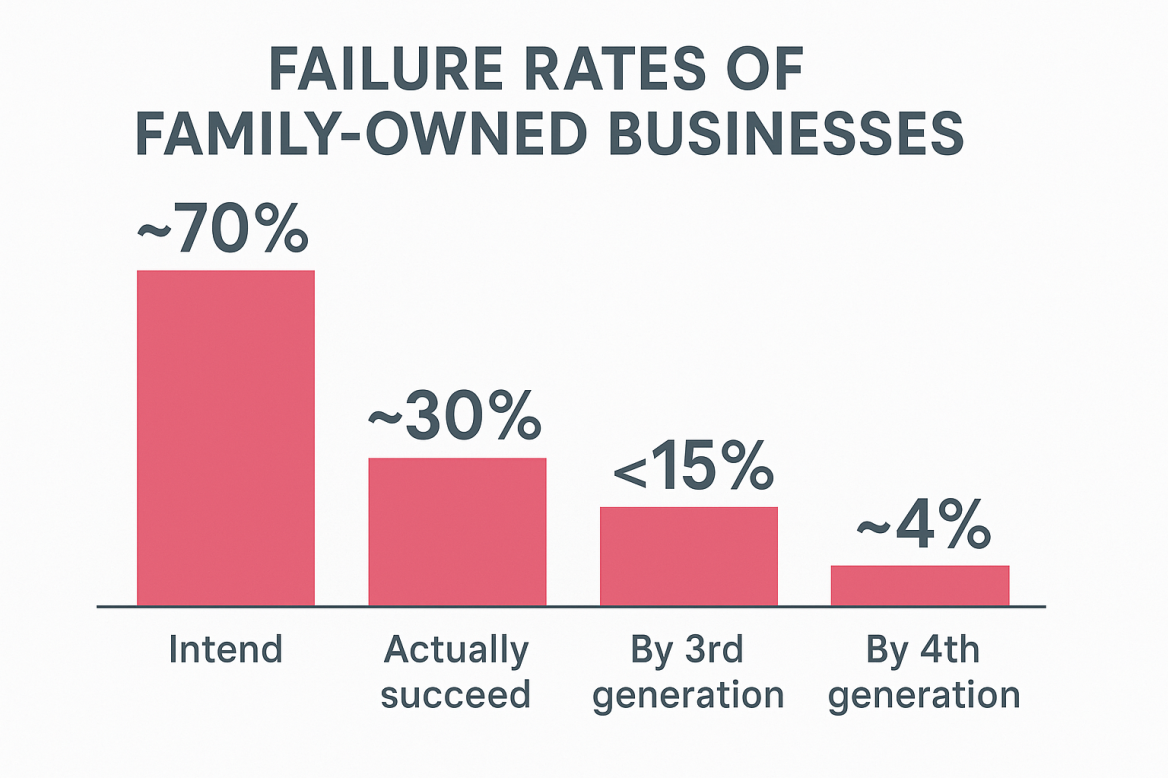
Remember, if you’re planning the succession of a family-owned business, it's crucial to be aware of the challenges.

Delays in the process
Being a busy executive means that longer range tasks such as succession planning may end up on the back burner. This is unfortunate and risky, because the future of your business depends on having the right leaders prepared to take over operations as seamlessly as possible. This won’t happen unless your succession plan is aligned with business operations, practices and schedules, which takes dedicated time, effort, resources and continual reevaluation.

Narrow Focus
Some companies make the mistake of only honing in on C-suite positions for their succession plan. Don’t make that same mistake! You should be working with HR and embracing a “hire for the future state” philosophy. Succession planning should be embedded throughout every part of an organization, going beyond that typical first or second organizational layer. It’s crucial to build broader awareness of leaders who have succession potential and chart out who produces the strongest results for the company.

Poor execution
It makes sense to want to handle the planning process on your own. After all, you know your company best, right? The problem is, it may end up costing more money than necessary if there are struggles or missteps during the process, such as promoting the wrong candidates to be successors. Due to lack of expertise, many companies take on only a ‘replacing’ mindset instead of a ‘developing’ one that is more comprehensive, long-term and includes room for regular evaluation/adjustment. Speaking of evaluation, failing to measure the success of the plan is another pitfall that you must avoid.

Cost-Prohibitive
When it comes to the vital task of identifying and developing future leaders, inexperience can be costly. Without a robust succession strategy in place, you run the risk of spending valuable resources promoting leaders who turn out to be the wrong fit and must ultimately be replaced. This could be the most costly mistake you could make.
You surely don’t want your company to fall victim to any succession-related pitfalls. It’s important to remember that succession planning is not a one-time initiative; you must make the commitment to analyze, research, plan, monitor and evaluate the performance of your succession planning efforts, and make adjustments as necessary.