
Paid Work Experience in Action: Connecting Chester County Youth with Career Opportunities
EDSI
·
Oct 05, 2026
For young people, getting a first look at the world of work can be a turning point. A paid work experience can build confidence, introduce new career possibilities and help youth discover strengths they may not have recognized in themselves.
In Chester County, Pennsylvania, EDSI's Career Corps program is helping make those opportunities possible through Paid Work Experience (PWE) – and this summer, the program reached an exciting milestone: eight youth participated in PWE placements, at 5 different worksites across the county, marking the highest number of placements the team has seen in a long time.
Behind that number is a collaborative process involving youth, EDSI staff, employers and community partners – all working together to turn career exploration into meaningful experience.
Career Corps provides year-round support to Chester County youth and young adults ages 16–24, offering career exploration, training, supportive services and work experiences designed to help participants move toward their goals. Learn more about Career Corps and the resources available to Chester County youth here, or keep reading.
From Career Exploration to Real-World Experience
A successful PWE starts well before a young person walks through the doors of an employer.
Youth enter Career Corps through a variety of avenues, including walk-ins at the Career Link, referrals from school counselors and foster care case managers, programs serving young parents, and outreach to local high schools such as Technical College High School (TCHS).
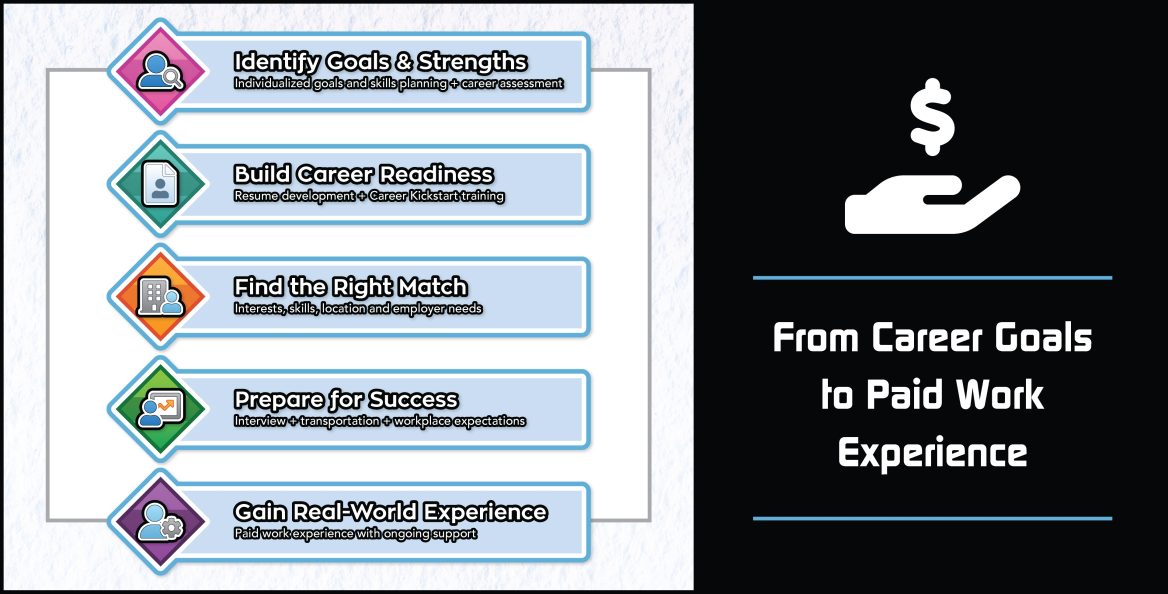
Once connected to Career Corps, youth work with the team to identify their goals, interests and strengths. Their preparation can include an Individualized Service Strategy (ISS) resume development, a career pathways assessment and Career Kickstart training focused on practical workplace skills such as time management, professional communication, email etiquette and workplace expectations.
That preparation helps the team make a more intentional connection between what a young person is interested in and what an employer has to offer.
"The biggest thing is getting to know the youth and what they want to do," said Youth Career Advisor Leilani Brennan. "Then we can find something that matches their interests."
The team also works to address barriers that could otherwise prevent a young person from participating. Transportation, for example, can be a significant challenge in the Chester County/York area. For one PECO placement in Berwyn, the team helped coordinate SEPTA and Uber routes to ensure participants could get to the worksite.
And they did. All three young men arrived on time every day.
Building Employer Partnerships
The other half of a successful PWE is an employer willing to open the door.
Career Corps Business Services Representatives (BSRs) Paul Kaniewski and Dominic DiLuigi, along with Program Manager Josephine Girdner, play a critical role in developing those partnerships. The team reaches employers through in-person visits, chamber events and existing community relationships.
PWE can be an attractive option for employers because they aren't the employer of record, making it a lower-risk way to provide a young person with meaningful work experience. The approach can be especially valuable for smaller businesses and nonprofit organizations that may need additional help but don't have the budget to hire another employee.
This summer, Career Corps expanded its outreach to nonprofits for that very reason.
Organizations such as The Wardrobe, United Way/Open Hearth and the SPCA became part of the conversation. Non-profits who lean on volunteer staff are often in tune with the type of training, patience, and mentorship associated with bringing on an individual with limited experience. .
The team has also seen the power of relationships work in both directions. Employers who understand the program can become a source of future referrals. For example, the owner of Make Your Day Design, a former special education teacher, has referred former students to Career Corps.
"Once employers understand what we're offering, they see the value," DiLuigi explained.
Making the Right Match
Finding an employer is only the beginning. Career Corps takes a collaborative approach to determining which youth will be the best fit.
When BSR’s identify an opportunity, the team brings it to its regular meetings. The Youth Career Advisor then considers whether there is a participant whose interests, skills and geographic situation align with the opportunity.
The employer ultimately interviews the candidate and makes the final decision.
That process creates an important connection between employer needs and participant goals.
It also gives young people a chance to practice another important skill: interviewing for a real opportunity.
The placements themselves are structured around a training plan, rather than simply providing youth with tasks to fill their time. Employers provide feedback on areas such as attendance, communication, teamwork and skill development.
Midpoint evaluations are designed to do more than measure progress. They give participants an opportunity to experience a formal workplace feedback conversation – something that can help prepare them for future employment.
Five Placements. Five Different Possibilities.
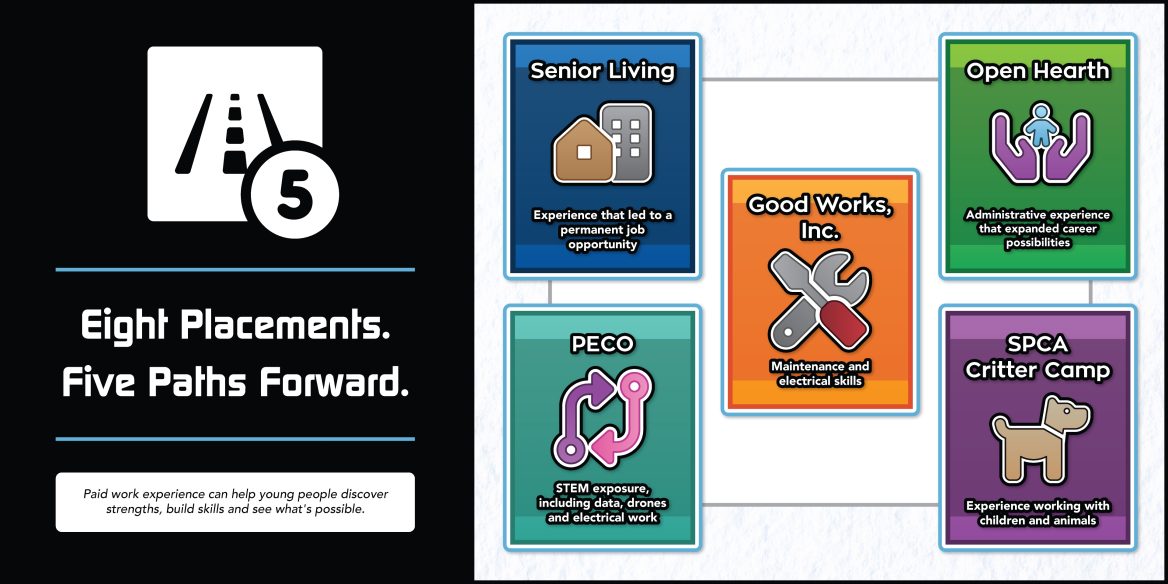
The five PWE placements this summer demonstrate just how varied meaningful work experience can be.
At Exton Senior Living, a career assessment helped identify a strong match between Robert's interests and personality and the director’s need for a personal assistant. ..
At PECO, three young men from under-resourced backgrounds were introduced to STEM-related career opportunities at sites in Philadelphia and Berwyn. Their experiences included exposure to data, drone operation and electrical work. Despite the transportation challenges, all three attended consistently and completed a final presentation. PECO also provided a testimonial presentation about the experience.
At Good Works, Inc., Ramal Jackson gained experience in maintenance and electrical work. His work ethic attracted attention beyond his original placement – an article about his work led multiple companies to reach out about potential employment opportunities. He is now employed with an electrical contractor with an invitation to join their apprenticeship program.
At Open Hearth, Kayla's placement challenged assumptions about what types of work might be possible for her. With a learning disability, she had previously been limited primarily to custodial roles. Her administrative assistant placement gave her the opportunity to build skills in areas such as communication, following directions and completing office tasks. She performed well and quickly, opening the door to new possibilities.
At the SPCA's Critter Camp, a young person identified through Career Corps' outreach to TCHS gained experience supporting a program that brought together children and animals. The placement required additional preparation, including a background check and identification. Turning 18 is a pivotal moment that caught this individual off-guard. Navigating onboarding requirements was a learning experience for all.
These experiences illustrate an important part of Career Corps: success doesn't look the same for every participant.
For one young person, success may mean a permanent job. For another, it may be discovering a career field they had never considered. For someone else, it may be gaining the confidence to recognize that they are capable of much more than they previously believed.
Support Doesn't End on the First Day
Once a young person begins a PWE, the Career Corps team remains involved.
Youth Career Advisors conduct weekly check-ins with participants, including a touchpoint on their first day. Employers and EDSI staff also establish midpoint and endpoint evaluations in advance.
That ongoing communication gives everyone an opportunity to address challenges early, recognize progress and make adjustments when needed.
For the team, this level of support is part of what makes a placement successful.
David Robinson, Career Corps Team Lead, noted that it took approximately a year to build the program's current momentum. Now, the team is seeing the results of that investment.
The five placements this summer aren't simply a record number. They represent a growing network of employers, stronger internal collaboration and a program that has become increasingly effective at connecting young people with opportunities that fit their interests and potential.
The Power of Partnership
Career Corps demonstrates what can happen when workforce development professionals, young people, employers and community organizations work together toward the same goal.
The Youth team helps participants understand their strengths, prepare for the workplace and navigate barriers. Business Services connects with employers and identifies opportunities. Employers provide real-world experience and feedback. Community partners help connect Career Corps with young people who can benefit from the program.
Together, those pieces create something more valuable than a short-term work placement.
They create a first step toward a career.
And sometimes, that first step changes what a young person believes is possible.
EDSI is proud to partner with communities, employers and workforce organizations to create meaningful pathways to employment and career advancement.
Interested in learning how you might replicate this program in your region?
Reach out by completing the short form below and one of our team members will contact you.