
Pushing Progress Together: A Collaborative Model Creating Pathways to Stability in Philadelphia
EDSI
·
Jun 25, 2026
In cities across the country, leaders continue to search for effective, sustainable solutions to address gun violence reduction – particularly for individuals facing overlapping challenges related to trauma, behavioral health, and long-term economic instability.
In Philadelphia, a different kind of response is taking shape.
Launching the P3 Model
The Pushing Progress Philly (P3) initiative was launched to meet this moment with intention. The City of Philadelphia’s investment and early research into evidence-based community violence intervention models set the stage for P3 to thrive. Designed as a cross-sector, collaborative model and based on Chicago’s READI model, P3 brings together public agencies and community-based organizations to deliver a coordinated, person-centered system of care that recognizes that lasting change requires more than a single intervention.
Rather than approaching violence intervention, mental health, and employment as separate challenges, P3 addresses them as interconnected parts of a larger story that requires alignment, trust, and sustained support.
Importantly, P3 was also designed to engage individuals who have not found success in more traditional programs and who may be resistant to services or disconnected from systems of care. This focus challenges partners to rethink engagement strategies and build trust in new, more persistent ways.
From Fragmentation to Coordination
Historically, systems serving vulnerable populations have operated in silos. Housing, healthcare, workforce development, and public safety often support the same people, but they typically work in parallel rather than in partnership.
P3 was intentionally built to change that.
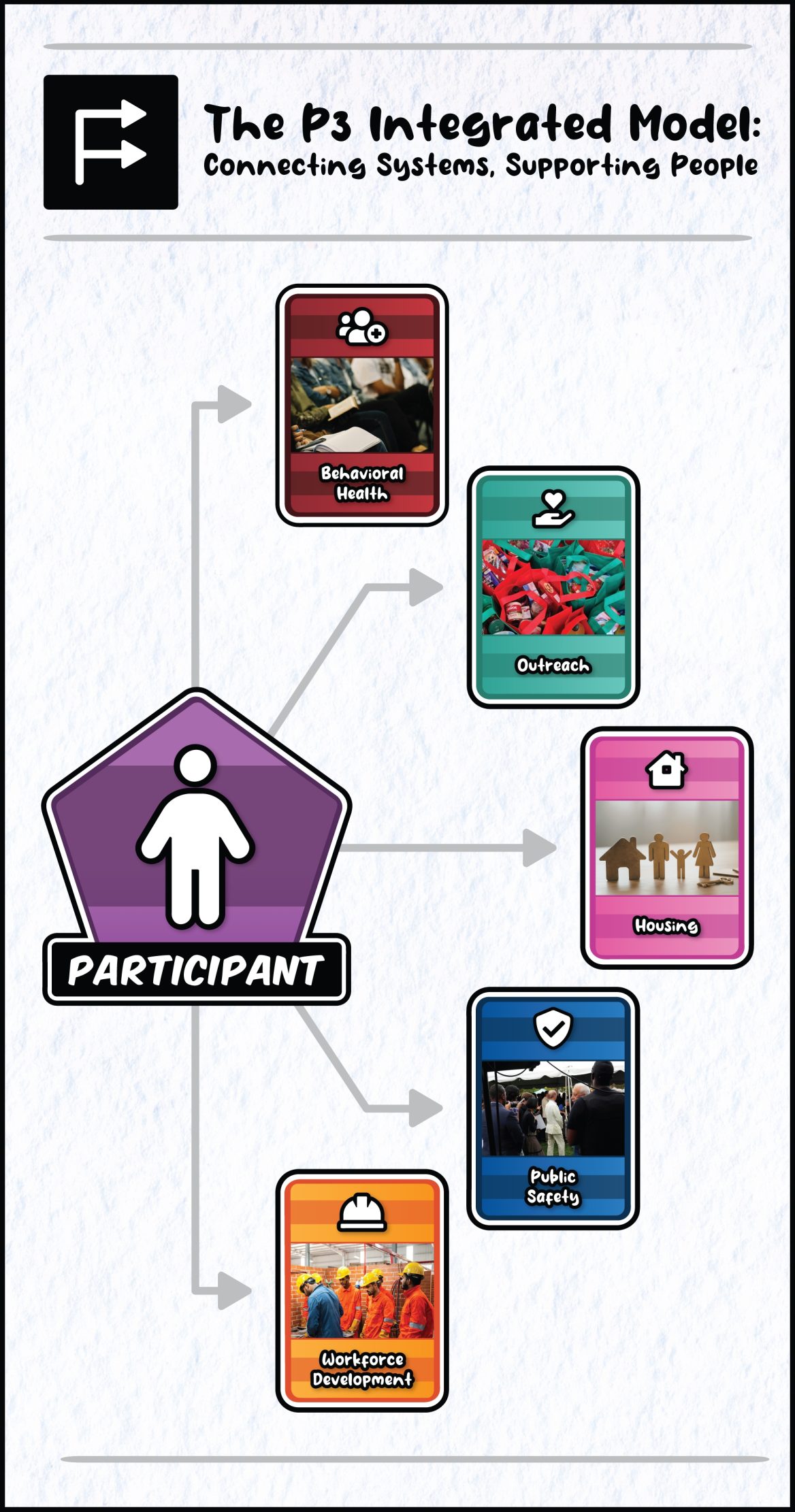
By aligning outreach, behavioral health services, housing support, and employment pathways under a shared framework, participant’s experience a more seamless program that reduces barriers, improves engagement, and increases the likelihood of long-term success.
At its core, P3 is about meeting individuals where they are and ensuring the system is ready to meet them there.
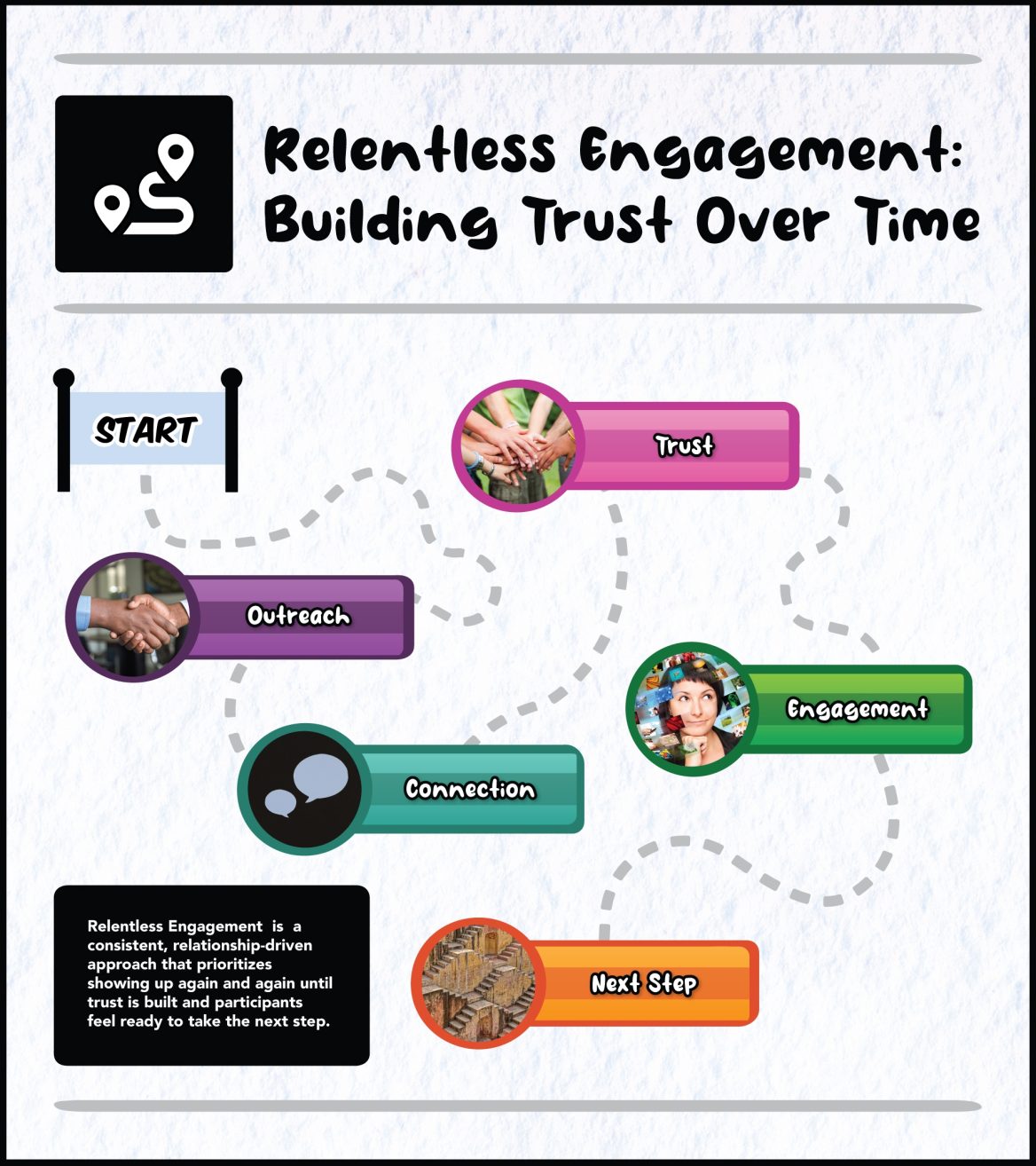
This includes a commitment to what program leaders describe as “relentless engagement” – a consistent, relationship-driven approach that prioritizes showing up again and again until trust is built and participants feel ready to take the next step.
The Partners Powering Progress
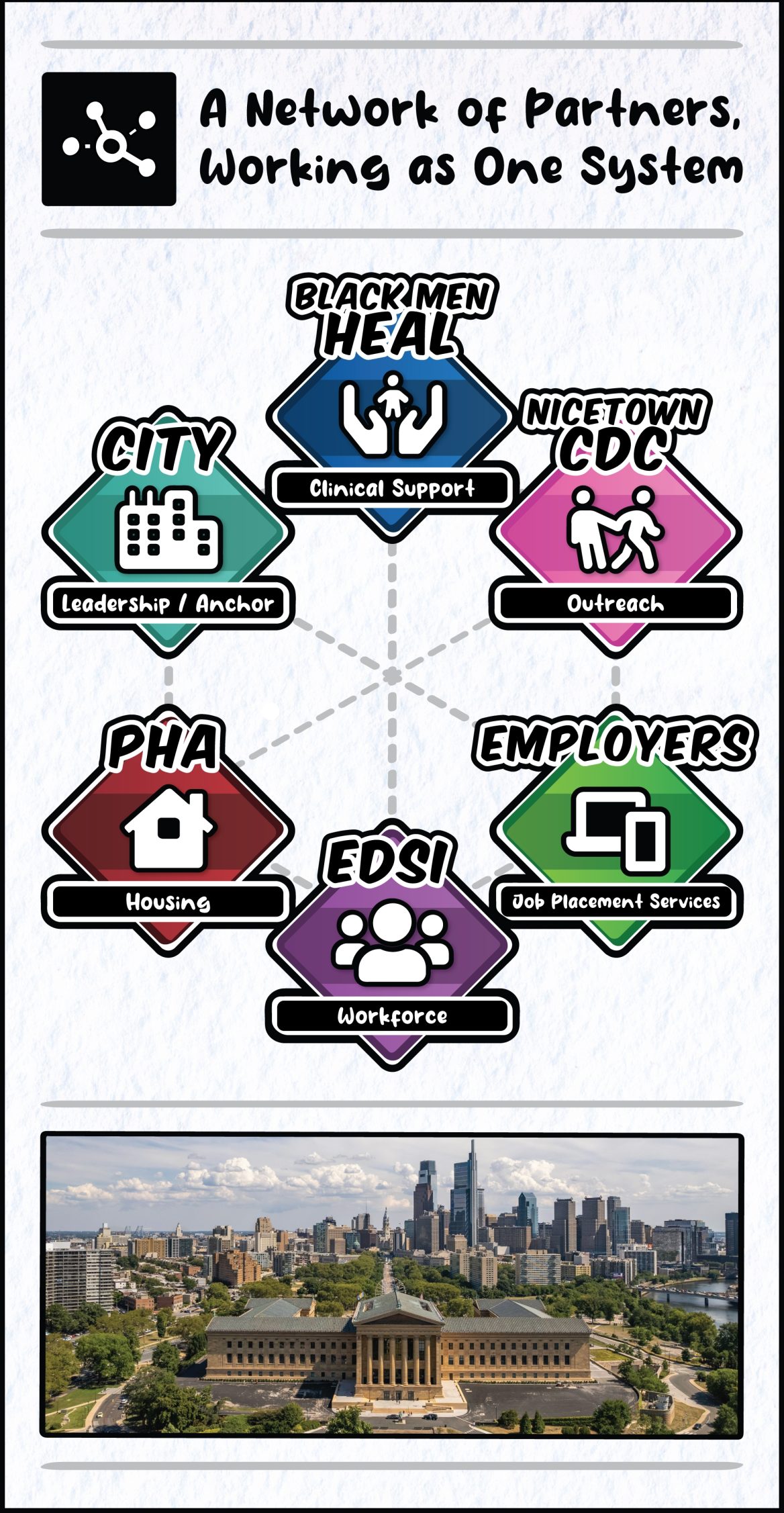
The following partners have been instrumental to the success of this highly impactful community program.
City of Philadelphia’s Office of Public Safety - Setting the Vision and Driving Alignment
As the lead convener, the City establishes the vision, funding structure, and cross-agency alignment that make P3 possible. By bringing together multiple departments and partners under a shared set of goals, the City ensures the initiative remains focused on long-term outcomes such as increasing safety, reducing risk of involvement in gun violence, housing stability, improved health, and safer communities.
Black Men Heal - Addressing Behavioral Health at the Core
For many participants, behavioral health needs are a significant barrier to stability. Black Men Heal delivers behavioral health services supports to both P3 participants and team members. Examples include group sessions for participants and critical incident services to both participants and staff. Black Men Heal embeds trauma-informed care into P3’s design and services.
Nicetown CDC - Building Trust Through Outreach
Engagement begins with trust. Nicetown CDC’s outreach teams meet individuals where they are, often in neighborhoods and through trusted sources. The outreach team builds relationships over time and connects at-risk individuals to services. This work is foundational, creating the bridge between isolation and opportunity and also sets up success by walking participants through what to expect from P3.
Philadelphia Housing Authority (PHA) - Stabilizing Through Housing and Wraparound Support
Through an innovative partnership and eligibility process developed by the City of Philadelphia, PHA, EDSI, and the Gun Violence Intervention Coordination Center (GVICC), P3 offers priority safety and housing for some of our P3 participants.
EDSI - Creating Pathways to Employment and Purpose
EDSI leads the workforce development component of P3, offering workshops based on cognitive behavioral therapy, transitional employment, job coaching, and career pathways. Stipends and wages are provided for attendance and work experience hours. These opportunities not only provide income, they also help individuals rebuild routines, develop confidence, grow skills, and reconnect with a sense of purpose.
Participants gain real-world work experience while receiving consistent support from job coaches, creating a bridge from immediate engagement to long-term employment.
These opportunities are especially impactful for individuals who may have faced significant barriers to employment, including prior incarceration, trauma, or long gaps in work history - providing not just income, but a renewed sense of direction and possibility.
A Participant Journey: From Survival to Stability
"It impacted me greatly! During my enrollment into P3 I was struggling financially and I just lost my apartment that I worked so hard to maintain for 15 months. Getting into P3 basically saved me in a way. The program helped me find housing; they gave me a transitional job to help me keep money in my pocket. P3 also helped me clear up legal fees that I owed for some time. P3 also gave me more knowledge on how to be better and have more emotional intelligence. I met some important gentlemen. I could say a book of things about the program along with some bonds I built with the men. It was definitely an experience I didn’t know I needed at the time. I’m forever grateful for P3."
How It All Comes Together
What sets P3 apart is not just the strength of its individual partners but the way those partners function as a cohesive system.
- Outreach teams initiate connection and build trust
- Behavioral health providers stabilize and support recovery
- Housing partners create a foundation for long-term success
- Workforce professionals provide pathways to independence
- City leadership ensures alignment, accountability, and sustainability
This integrated approach allows participants to move forward with the right support at the right time – without having to navigate complex systems alone.
Growth Leads to Transformation
“As the Program Manager for the Transitional Jobs Program at P3, my greatest pleasure has been witnessing transformation in real time. Growth is never a straight path, and watching participants face setbacks, overcome challenges, and continue moving forward is truly inspiring.”
Supportive, Personalized Approach
Unlike traditional programs where participants may engage sporadically, P3 fosters deeper, more consistent involvement. Participants often spend significant time in programming, including up to 200 hours of cognitive behavioral-focused workshops where they build relationships with staff and peers. This continuity helps create a strong sense of community, accountability, and belonging.
The program environment itself reflects this approach. With dedicated space and a more personal, community-oriented atmosphere, P3 feels less like a transactional service model and more like a supportive network where participants are known, welcomed, and encouraged.
Early Outcomes and Ongoing Impact
While still evolving, P3 is already demonstrating promising results:
- Increased engagement among individuals historically disconnected from services
- Nearly 850 individuals interested in joining P3 since its launch in 2023
- Improved access to stable housing and behavioral health support
- Over 2,000 hours of behavioral health-based workshops offered in 6 months of 2026
- Stronger coordination across agencies and providers
- P3’s team is designed with the expertise of 3 subcontracted vendors, working under one P3 community
- Emerging pathways to employment and economic mobility
- Worksite experiences in occupations from labor to hospitality to maintenance to customer service
Equally important, the initiative is reshaping how systems collaborate by breaking down silos and building a more responsive, human-centered approach to service delivery. This approach is particularly critical given the elevated risk population served and reinforces the importance of sustained engagement and coordinated support.
Expanding the Conversation
P3’s impact extends beyond service delivery. It is also contributing to broader conversations around community safety and prevention.
A recent feature in The Trace, “In Philadelphia, Preventing Gun Violence Means Helping Young Men Change Their Thinking,” highlights how addressing trauma, stability, and opportunity can play a critical role in reducing violence and supporting long-term change.
Local momentum continues to build, with recognition from city leadership and emerging research reinforcing that workforce development and economic opportunity are essential components of effective violence prevention strategies.
The Bigger Picture: A Model for What’s Possible
P3 reflects a growing recognition that complex challenges require integrated solutions.
By aligning mental health, housing, and workforce development services, Philadelphia is demonstrating what can happen when systems move beyond fragmentation and toward collaboration. The result is not just improved outcomes for participants but a stronger, more connected community.
At its heart, P3 is not just a program, it’s a commitment to persistence, partnership, and the belief that with the right support, individuals can move from surviving to thriving.
Learn More
Programs like P3 demonstrate what’s possible when communities, public systems, and workforce partners come together around a shared goal: creating real pathways to stability and opportunity.
If your organization is exploring new approaches to workforce development, community engagement, or cross-sector collaboration, we’d welcome the opportunity to connect.