
The Top Three Millennial Stereotypes and How to Address Them

Kevin Schnieders - Chief Executive Officer ·

Every generation criticizes the next. But what if the very traits we complain about in younger workers are actually what modern workplaces need? 

As a Gen Xer who's built a multi-generational team, I've learned that understanding *why* these differences exist matters more than judging them. Let me walk you through the three biggest generational stereotypes—and why addressing them makes your entire organization stronger.

Kevin leaders pic 2020
Kevin Schnieders, EDSI Chief Servant Leader

"They're lazy. They don't want to work like we did and they want so much accommodation. It's like everything is a free-for-all. You can't even count on them to show up on time. It's hard to believe how much support and attention they want. I just can't work with them."

"Oh, I'm sorry. Did you think that was a quote about millennials? Those same statements could have been heard in any conference room in 1970, with members of the silent generation, aka the Greatest Generation, talking about baby boomers. As Gen Zs and millennials navigate a rapidly changing world of work, they are reevaluating the capabilities they need to succeed and the support they want from their employers."

And the pattern continues. According to an article by Deloitte, Gen Zs, for example, are more focused on work–life balance than climbing the corporate ladder—only 6% say their primary career goal is to reach a leadership position. But they don't lack ambition: learning and development ranks among their top three reasons for choosing an employer.

Quote

“As Gen Zs and millennials navigate a rapidly changing world of work, they are reevaluating the capabilities they need to succeed and the support they want from their employers”

Elizabeth Faber, Deloitte Global Chief People & Purpose Officer.

Every generation has a tendency to look at the generation that follows them with a critical eye. It could be chalked up to the fundamental attribution error. You know, when you’re late for a meeting it’s because of traffic, the weather or your incredibly busy schedule. However, when your colleague or client is late for the meeting, it’s because he’s inconsiderate and disorganized.

So, what are the top three stereotypes about millennials, and how can we address them?

STEREOTYPE #1 - They need to know why

I’m a Gen Xer or even more specifically, a “Latchkey Kid," a subset of the Gen Xers that was defined by working parents who left their children alone after school. Like the baby boomers before us, we feel like someone told us what to do, and we did it - all with a smile on our face.

The millennials are quite different in this aspect. They like explanations. Tell one of them to do something, and they want to know why. What’s the purpose? Well, let’s be honest, what’s wrong with explaining the purpose of a project, task or assignment? Makes sense, would you agree?

THE SOLUTION

Are you sure you know why you’ve asked them to do something? If you are, take a minute and explain the purpose up front. You will likely get that five minutes of productivity back later in the day. Just stop playing Fantasy Football or shopping online, and you’ll pick up all kinds of time that you can use to explain stuff to millennials.

Understanding purpose isn't just a millennial preference—it's becoming a universal workplace expectation. When employees understand the "why" behind their work, they're more engaged, make better decisions, and feel more connected to organizational goals. This is where strong talent management strategies become essential, helping leaders communicate purpose and align individual roles with broader company objectives.

STEREOTYPE #2 - They want a trophy for everything

Hey, who started giving participation trophies? Not the millennials. We did. The baby boomers and Gen Xers thought it would be a great idea to hand out “Congratulations, you’ve finished the race without causing lasting embarrassment to your family trophies,” and now we’re mad that millennials are expecting them.

Like we often say regarding things that seem to upset people - so what? Is it really a big deal that everyone gets some additional recognition? Is an overabundance of trophies really destroying the competitive fabric of our workplaces? I know plenty of millennials who will compete until they drop and shove you out of the way to cross the finish line first. Just take a few minutes to tell them why it’s important to win, right?

THE SOLUTION

Many studies are available that show the effects of rewarding everyone for basic effort. In Luke Simmons’ article, Millennials and the Participation Trophy Mindset, he suggests, “the participation trophy mindset has actually provided powerful motivation for Millennials to work harder, seek more growth, and strive for greater success than their parents.” This is an area where you could apply “and/both” thinking. Feel free to recognize participation and give additional praise and recognition for higher achievement.

STEREOTYPE #3 - They want too much accommodation and flexibility

What’s wrong with accommodation and flexibility? Maybe the additional work/life balance, or as we call it in our company, life/work balance, is a great thing? 

Maybe granting more flexibility in schedules helps people feel more balanced and therefore able to be the best version of themselves at work. We call our additional flexibility "schedule shaping." We ask our representatives to be in community, in the office, 40% of the time. The other 60% of the time they can choose to work remotely. EDSI prides itself on offering flexible start and end times. If there is an ongoing road construction project, come in early and leave early to miss traffic. If you want to be home earlier with your family in the summer months, come in early and leave early. If you don't like your kids – author's note: I ADORE our daughters, and this is a judgment free blog – as I was saying, if you don't like your kids, come in after you drop them off for school and go home later. What's wrong with accommodation and flexibility? Maybe millennials were right to ask for it, and maybe we were right to provide more.

THE SOLUTION

Why Flexibility Benefits Everyone

The truth is that we all want flexibility in our jobs. Both employers and employees benefit from flexibility, and because millennials are so connected to technology, it’s no surprise they gravitate toward remote employment options. A study by Bentley University indicated that 77 percent of millennials believe that a flexible schedule would make them more productive. The Georgetown University research validates this further—58% of young adults rank flexible work schedules among their top considerations when choosing an employer, second only to paid time off.

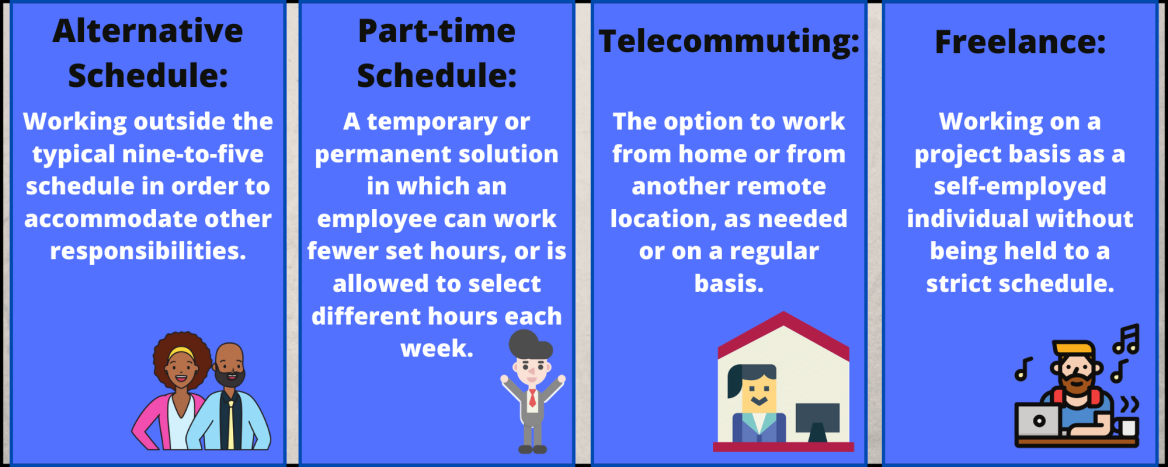
Several flexible working arrangements you may want to consider include alternative work hours, a part-time schedule, telecommuting or freelance status.
With the growing number of millennials in the workforce, it is crucial for employers to get creative with perks and benefits when it comes to employee attraction, engagement and retention. Take our talent management assessment to gain insight into the five primary talent management areas your organization may need to improve. Includes a free results report!

How the Pandemic Changed Everything

The COVID-19 pandemic accelerated what many organizations had been slowly considering for years. Almost overnight, companies transformed their IT infrastructure, reimagined onboarding processes for remote environments, and digitized workflows that previously required physical presence. What seemed impossible in early 2020 became standard practice by year's end. This rapid adaptation proved that flexibility isn't just possible—it can be more efficient. Organizations that invested in cloud-based systems, virtual collaboration tools, and digital onboarding platforms discovered they could maintain (and in many cases improve) productivity while offering unprecedented flexibility.

Getting Started with Flexibility

You can start to explore flexibility options by first evaluating the tasks that employees perform and decide if flexibility can be incorporated into operations. With modernized technology infrastructure now in place at many organizations, the operational barriers that once prevented flexible arrangements have largely been removed. The question is no longer "Can we do this?" but rather "How do we optimize this?" This will no doubt make your company more appealing to millennial jobseekers and workers across all generations who experienced the benefits of flexible work arrangements during the pandemic.

Several flexible working arrangements you may want to consider include alternative work hours, a part-time schedule, telecommuting or freelance status.

Rethinking Benefits for a Mobile Workforce

The data also reveals something crucial about benefits design: 73% of young adults want benefits that are portable—meaning they can take them from job to job. This suggests that traditional benefit structures may need reimagining to meet the expectations of a more mobile workforce. Organizations that build comprehensive workforce planning strategies around these insights will have a competitive advantage in attracting and retaining top talent across all generations.

With the growing number of millennials in the workforce, it is crucial for employers to get creative with perks and benefits when it comes to employee attraction, engagement and retention. Take our talent management assessment to gain insight into the five primary talent management areas your organization may need to improve. Includes a free results report!

Final thoughts

At the end of the day, I know millennials who want more structure than others. I know some for whom it is more important to know why, and I know some who thrive on recognition, while others couldn’t care less about affirmation. I would suggest that you take the time to get to know each person individually and keep the conversation flowing with regular check-ins. While there are absolutely trends and truths about each generation (WWII shaped realities, and the internet changed nearly everything), I still think it’s more important to know each persons’ unique work preferences in addition to his or her age. If you want to hedge your bets, provide everyone in your workplace with a greater sense of purpose, recognition and accommodation. I promise the baby boomers won’t turn any of it down.

To learn more about talent management and workforce planning strategies, go here.

Are you passionate about building a multi-generational workforce? Reach out to our team to discuss your workforce planning needs today!