Unlocking Business Potential: The Strategic Importance of Skill Gap Analysis
EDSI
·
Dec 15, 2025
SHARE
In the dynamic landscape of today's workforce, understanding and addressing skill gaps is not merely a task but a strategic imperative for organizational success. Picture this: your workforce is the engine driving your company forward, and just like any complex machinery, it requires precise calibration. This calibration process is where Skill Gap Analysis comes into play, serving as the blueprint to align individual and collective skills with the demands of the job.
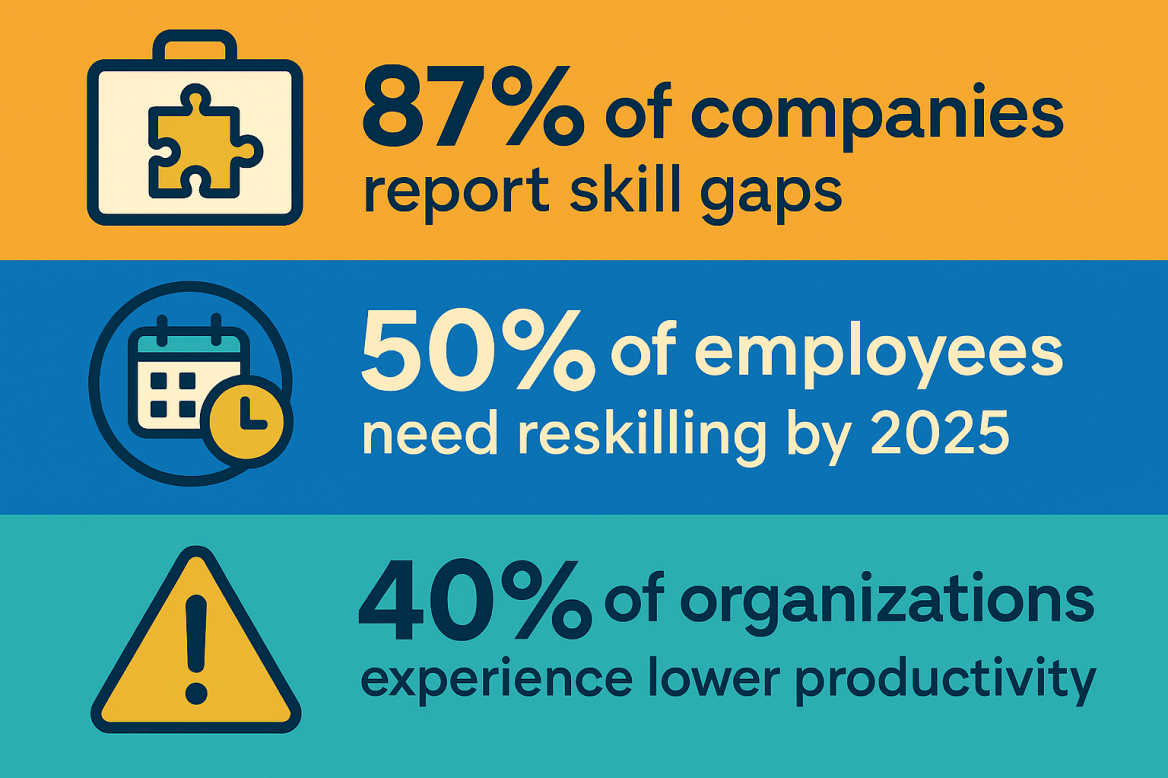
According to McKinsey, 87% of companies worldwide report current or expected skill gaps, and 40% of organizations experience lower productivity due to these gaps. The World Economic Forum also estimates that 50% of all employees will need reskilling by 2025 to keep pace with technological advancements.
Decoding Skill Gap Analysis
A skill gap analysis is a systematic approach to identifying disparities in the skills possessed by individuals or groups and the skills required for optimal job performance. It's not just about recognizing the gap; it's about constructing the most effective bridge to span it. This process is integral to crafting a targeted and impactful training program, with the initial step focusing on a meticulous analysis to identify specific training needs.
The Three-Step Mastery
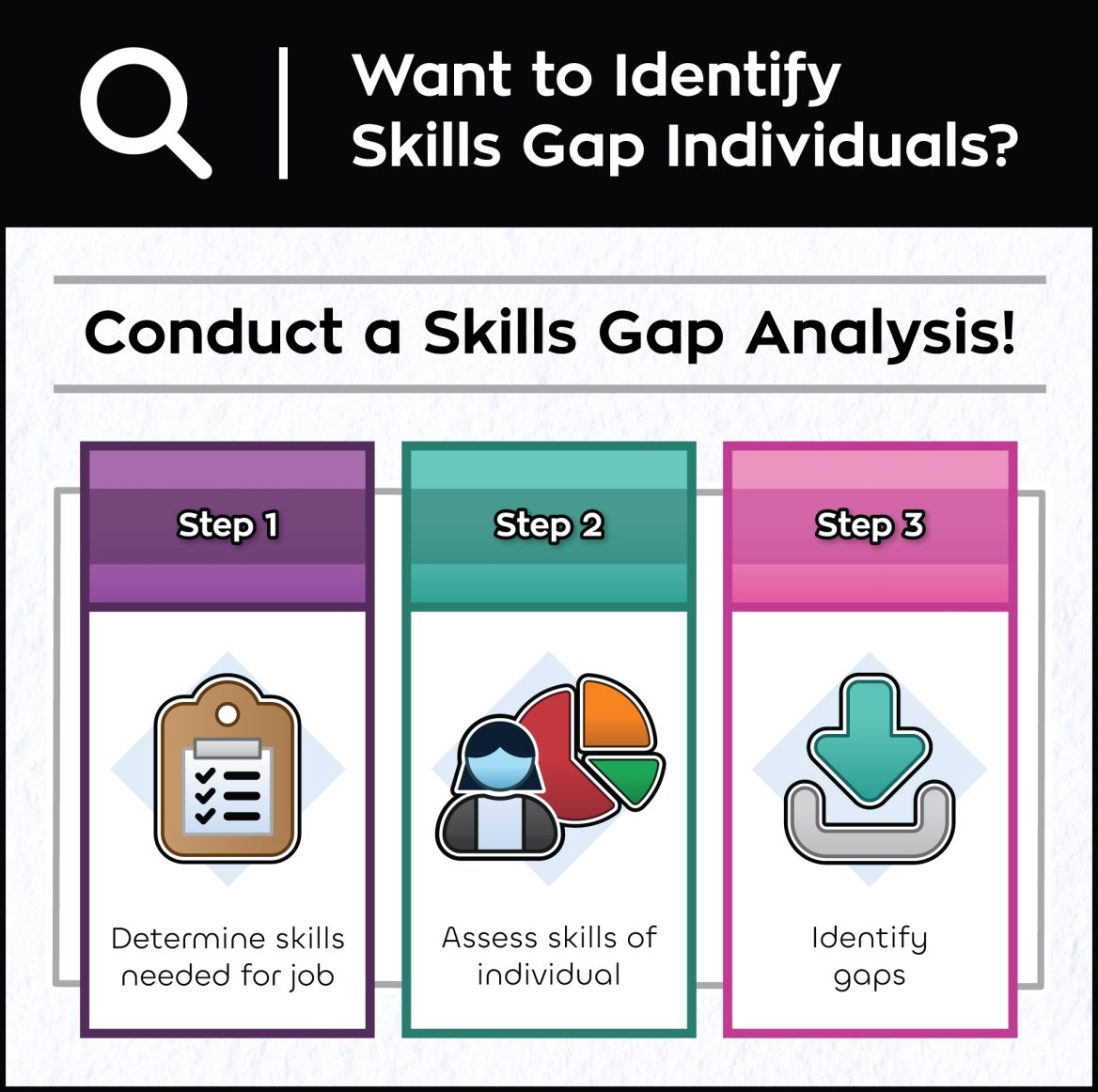
Conducting a skill gap analysis unfolds in three strategic steps: defining the desired skills, assessing the current skills of individuals, and pinpointing the gaps that exist. The illustration below provides a visual guide to this structured process.
At EDSI, we deploy a precision method known as Job Task Analysis (JTA) to ascertain the skills essential for job functions. This involves delineating overarching job responsibilities and delving into granular tasks necessary to fulfill those responsibilities.
Elevating Assessment with Skilldex
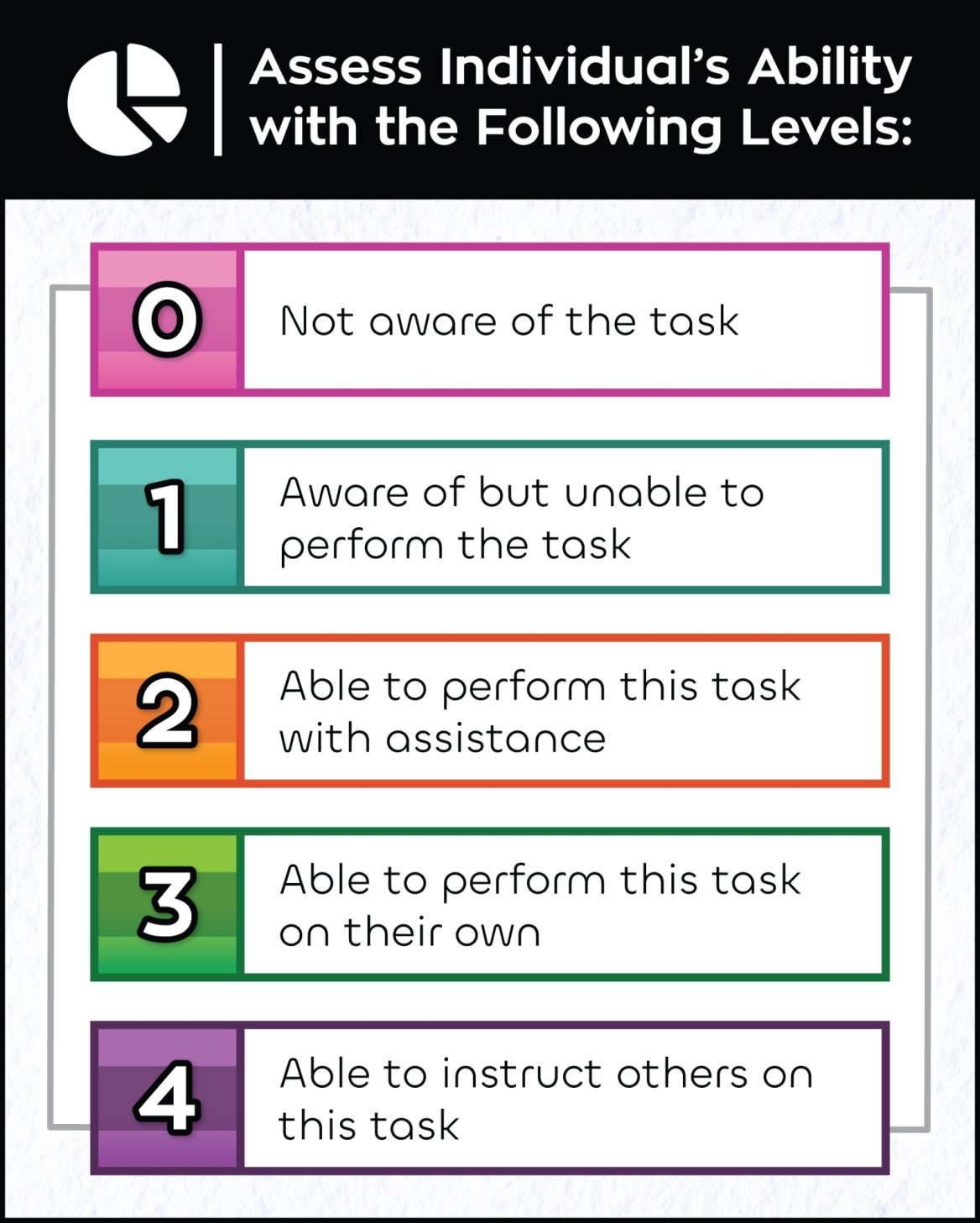
Post-JTA completion, the analysis becomes a potent tool for assessing individual skill levels. Consider a scenario with a mechanic tasked to troubleshoot a malfunctioning muffler. Transforming the JTA into a skill survey, employing defined rating levels becomes pivotal for accurate evaluation.
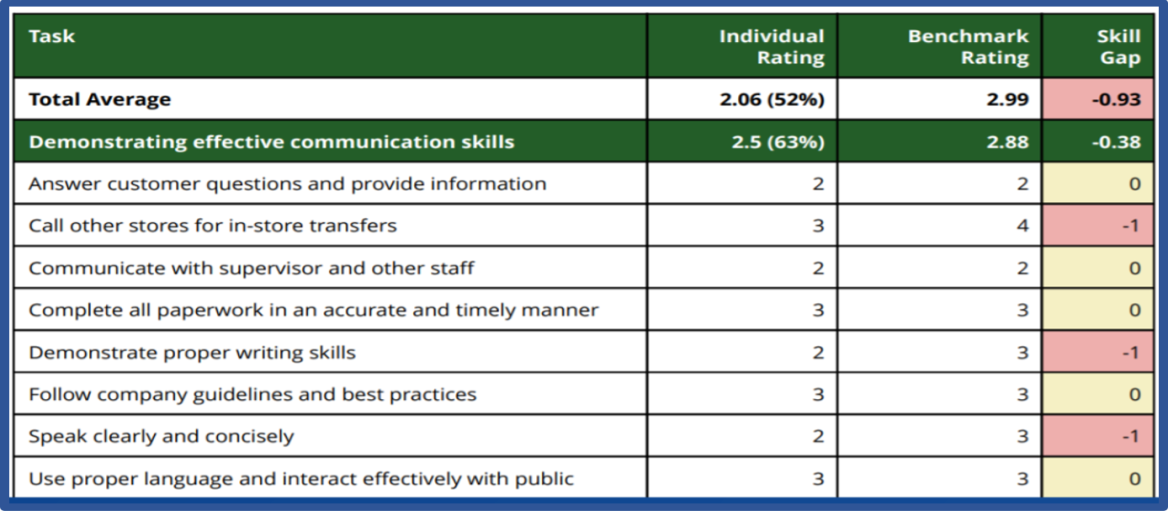
Enter Skilldex, EDSI's proprietary web-based skill assessment tool. Skilldex seamlessly generates and disperses skill surveys derived from job descriptions. This facilitates swift creation of multiple JTAs and skill surveys while allowing users to establish required skill levels for each task. The system's capacity to auto-generate a skill gap report based on these skill levels adds an extra layer of efficiency. For more information about Skilldex and how we approach Skill Gap Analysis, go here.
Bridging the Divide: The Skill Gap Report
The generated skill gap report serves as the cornerstone for crafting a bespoke training plan. This process, rooted in robust and pertinent data, ensures that training initiatives are tailored precisely to identified needs. The beauty lies in the precision – we identify the specific responsibilities and tasks integral to job completion, determine the required skill level for each task, and evaluate an individual's capability to meet these standards.
Scaling Impact: Skill Gap Analysis at a Macro Level
Expanding the scope beyond individual assessments, the same systematic approach can be applied at a shift-wide, departmental, or even company-wide level. Imagine deploying a skill survey across an entire shift, department, location, or the entire organization. This aggregated data unveils trends, providing insights into issues hindering business goals, new skills demanded by technological advances, the necessity for cross-training, and opportunities for enhanced scheduling.
Organizations that realign HR processes based on skill gap assessments can see up to a 40% boost in productivity, 50% higher employee engagement, and 50% lower training costs, according to McKinsey. These outcomes demonstrate how data-driven skill gap analysis directly contributes to operational efficiency and strategic growth.
Skill Gaps at a Glance: Why Action Can’t Wait
The numbers speak for themselves: skill gaps are a widespread challenge impacting productivity and future readiness. Here’s a snapshot of the current landscape.
Strategic Business Insights
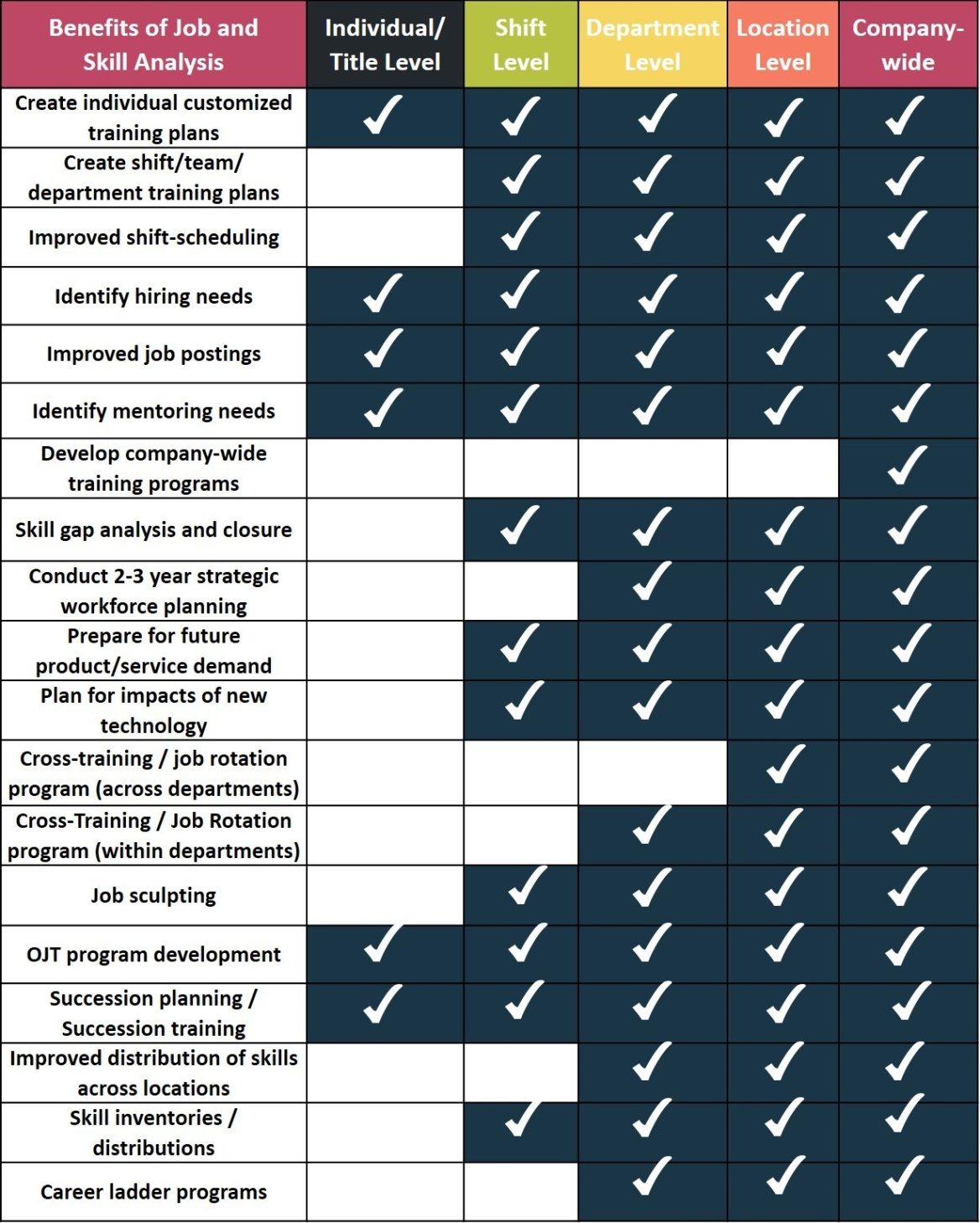
While evaluating an individual's skill gap is insightful for personal and professional development, extending the analysis to a broader organizational level uncovers invaluable strategic insights. Discoveries range from meeting business goals to adapting to technological shifts and identifying cross-training needs. Explore the graphic below for specific examples of job analysis benefits at various organizational levels.
Schedule a free consultation with one of our experts to explore how EDSI’s skill gap analysis process can uncover opportunities and drive meaningful change within your organization.