Don't Sell. Solve: How the Value Translation Framework is Changing the Employer Engagement Conversation

Kim Glenn - Managing Director, Innovative Learning Solutions ·

Why the strongest employer partnerships start with a problem, not a pitch.

Picture a workforce professional sitting across the desk from a plant manager.

Maybe she runs an adult education program. Maybe she's a business services representative from the local American Job Center. She opens the conversation by explaining what she has to offer: the funding stream, the training program, the partnership she's hoping to build.

He listens. He asks if it's free. He thanks her for her time.

Six weeks later, his production lines are still short-staffed, and her candidates are still looking for someone to hire them.

Nothing about that meeting was necessarily wrong. The program was real. The funding was real. The candidates were ready to work.

What went sideways was the frame.

She walked in with something to sell. He was sitting on a problem.

Those are two very different conversations, and they rarely end the same way.

Whether you're carrying a WIOA Title I caseload, operating an adult education program, or supporting employer engagement efforts in another capacity, the organizations that build the strongest employer partnerships tend to share one characteristic: they approach employers as problem-solvers first and program providers second.

Meet the Author

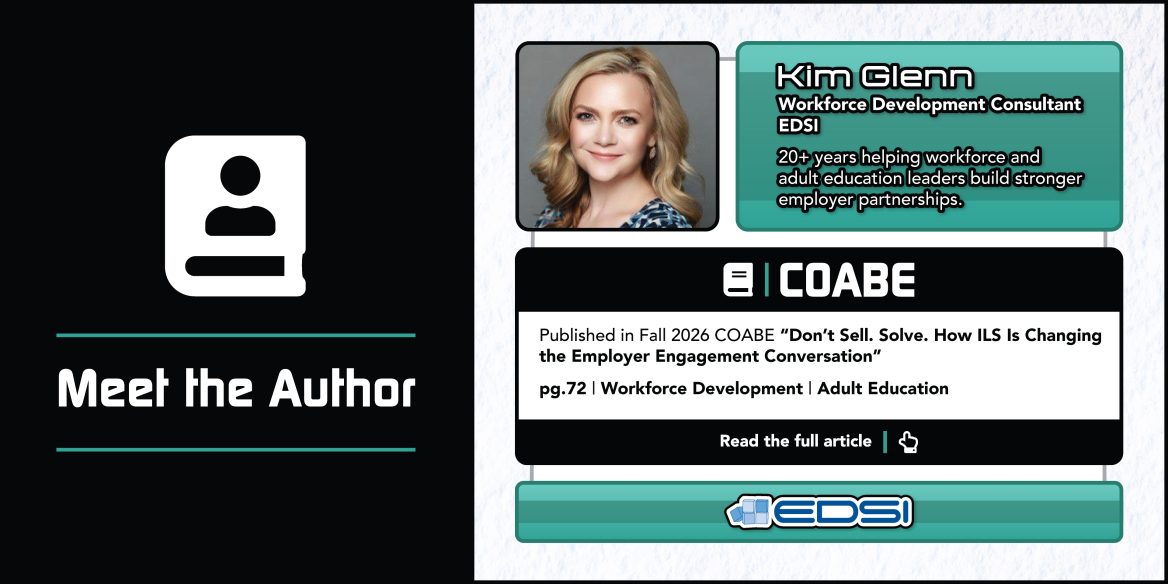
Kim Glenn has spent more than two decades helping workforce development and adult education professionals strengthen employer partnerships, build talent pipelines, and improve workforce outcomes. Her work on the Value Translation Framework has been field-tested with practitioners across multiple states and presented to national audiences.

Kim's latest study, "Don't Sell. Solve. How ILS Is Changing the Employer Engagement Conversation," was published in the Fall 2026 issue of COABE Journal (p. 72).

A Different Way to Think About Employer Engagement

That distinction is the foundation of the Value Translation Framework, a body of work developed through more than two decades of workforce development and adult education consulting and field-tested with practitioners across multiple states and national audiences.

The premise is simple.

"Employers are not deciding whether to support workforce development. They are deciding how to solve operational problems that cost them money every quarter."
The shift may sound subtle, but it changes nearly everything about how employer conversations begin.

Kim Glenn, ILS Managing Director

Whether the talent pipeline behind a workforce professional originates in an American Job Center, an adult education classroom, or an integrated partnership between the two, the practitioner who enters the conversation prepared to address those challenges is likely to have a very different meeting than the one who arrives focused on explaining a program.

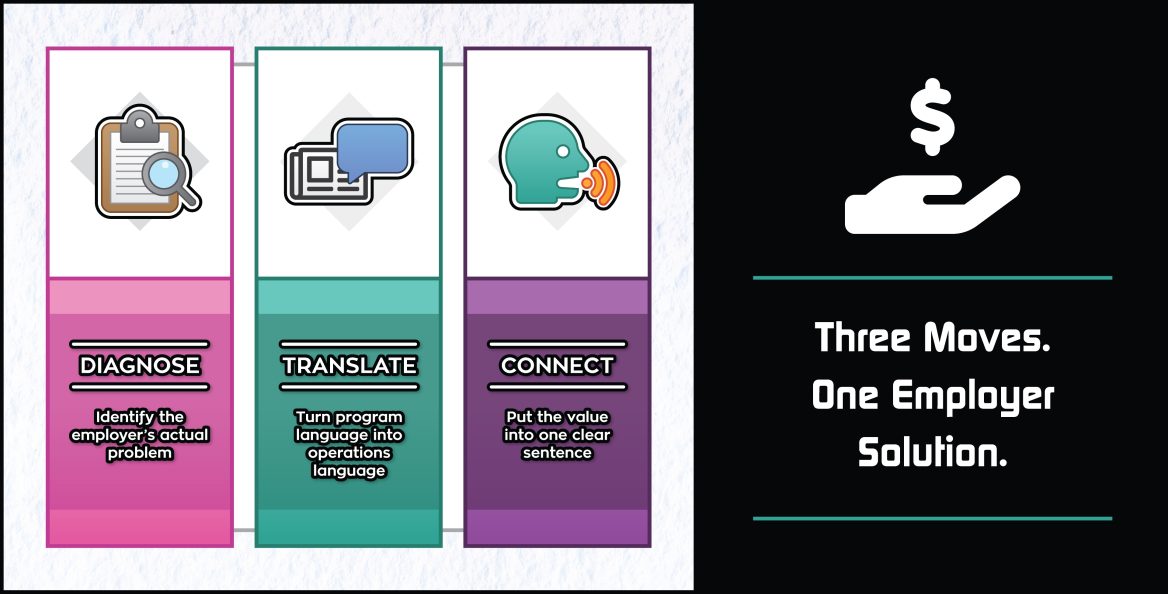
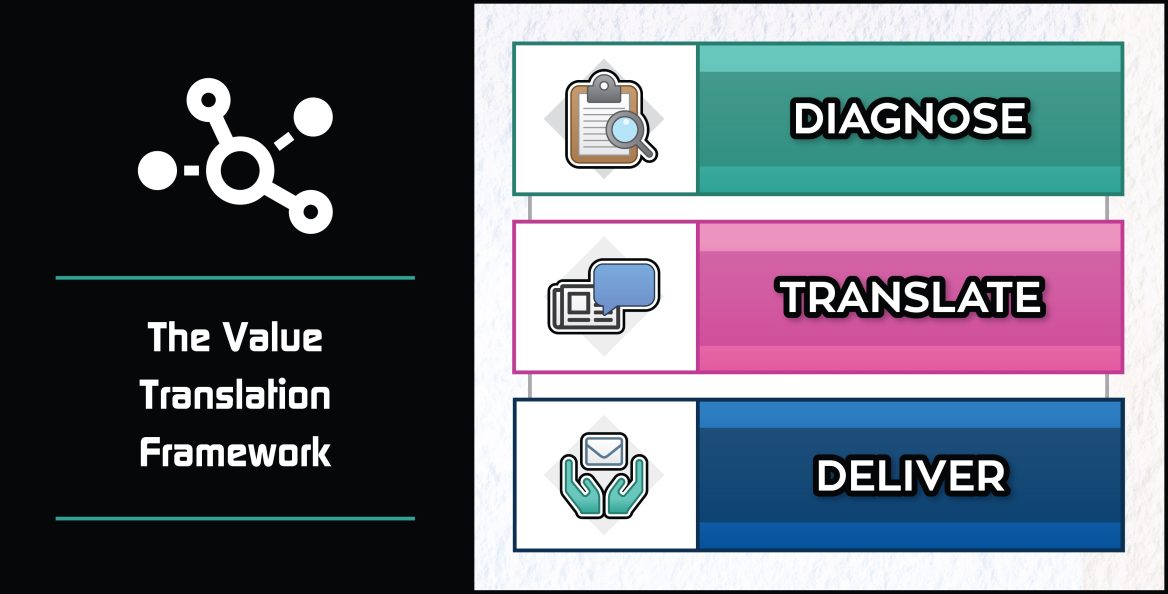
First, Diagnose the Employer's Actual Problem

Employer engagement begins with research, not outreach.

Fortunately, workforce professionals do not need access to proprietary business data to identify areas of potential need. Publicly available information often reveals valuable clues. Roles that remain posted for extended periods, repeated openings for the same position, expansion announcements, or new contract awards can all indicate where staffing challenges may be affecting operations.

The goal is not to conduct a complete organizational assessment.

The goal is to identify one specific and observable challenge that can serve as the starting point for a meaningful conversation.

When outreach begins with an understanding of the employer's likely pain point, employers are far more likely to see the conversation as relevant to their business.

Second, Translate Program Language into Operations Language

Many workforce professionals are accustomed to describing services through the language of programs.

Employers think differently.

They evaluate solutions based on operational impact.

Consider digital literacy training. Workforce professionals naturally describe it as a training service. Employers are more likely to evaluate whether those same candidates can reduce onboarding time, require less supervisor support, and become productive more quickly.

The activity itself has not changed.

The frame has.

Program language explains what we do. Operations language explains why it matters to the employer.

That difference often determines whether an employer sees a workforce initiative as a valuable business solution or simply another program seeking participation.

Third, Deliver the Value in One Sentence

The final step is putting the value proposition into a concise statement:

We help [employer type] solve [specific problem] by providing [candidates with specific preparation], which results in [measurable outcome].

Practitioners who can complete that sentence clearly and honestly have a message employers can act on.

Those who struggle to complete it have discovered where additional preparation, research, or program alignment may be needed before outreach begins.

Often, the exercise itself becomes one of the most valuable parts of the process.

Why This Matters Now

The case for employer-centered engagement has only grown stronger in recent years.

Across industries, employers continue to face workforce challenges related to attraction, retention, and productivity. At the same time, workforce development and adult education systems are increasingly measured on outcomes that align closely with employer priorities.

That creates a significant opportunity.

A business services representative speaking with a healthcare employer and an adult education coordinator engaging the same organization may now be working toward many of the same goals, even if they come from different programs or funding streams.

Retention, workforce readiness, reduced turnover, and stronger employment outcomes are outcomes employers care about and that workforce systems increasingly track as indicators of success.

When practitioners focus employer conversations on those shared objectives, they create opportunities for stronger partnerships, more coordinated service delivery, and better outcomes for job seekers and businesses alike.

One Mindset, Applied Earlier

In many ways, the Value Translation Framework is not a departure from traditional workforce development practices.

It is an extension of them.

Successful workforce professionals have always built relationships, listened carefully, and worked to understand employer needs. The framework simply applies that mindset earlier in the engagement process, before the first conversation ever takes place.

Showing up prepared with an understanding of an employer's likely challenge, rather than leading with a description of available services, changes the tone of the interaction from the start.

It reflects the same philosophy behind BRIDGE and other employer engagement approaches that emphasize relationship-building, responsiveness, and business relevance.

After all, employers are not looking for programs.

They're looking for solutions.

Value Translation Framework
The Value Translation Framework

Explore the Complete Research and Framework

The Value Translation Framework presented here is part of a larger body of work examining how workforce and adult education professionals can strengthen employer engagement by leading with business solutions instead of program offerings.

Kim's full article, "Don't Sell. Solve. How ILS Is Changing the Employer Engagement Conversation," appears in the Fall 2026 issue of COABE Journal (p. 72) and includes:

✓ Supporting research and labor market data

✓ WIOA policy implications

✓ Industry examples from healthcare, hospitality, and manufacturing

✓ Practical applications for workforce and adult education practitioners

Read the full COABE Journal article here

Let's Build Stronger Employer Partnerships

The most successful employer engagement strategies don't begin with a sales pitch. They begin with understanding what challenges employers are trying to solve and positioning workforce solutions in a way that directly supports business outcomes.

If your organization is looking to strengthen employer relationships, improve workforce outcomes, or equip staff with practical employer engagement strategies, EDSI can help.

Connect with our team to learn more about employer engagement training, technical assistance, and workforce solutions designed to help organizations build stronger partnerships with employers.