
Why Investing in Employees Matters — and How Career Sculpting Makes a Difference
Arlene DeSantis Jones
- Chief Talent Officer
·
Apr 01, 2025
Many companies today struggle with a persistent challenge: keeping talented employees engaged and committed. Turnover isn’t just a human-resources headache — it undermines productivity, weakens institutional knowledge, and drains resources. The good news? Organizations that actively invest in career development and create clear paths for growth often enjoy dramatically better retention, stronger loyalty, and better long-term performance.
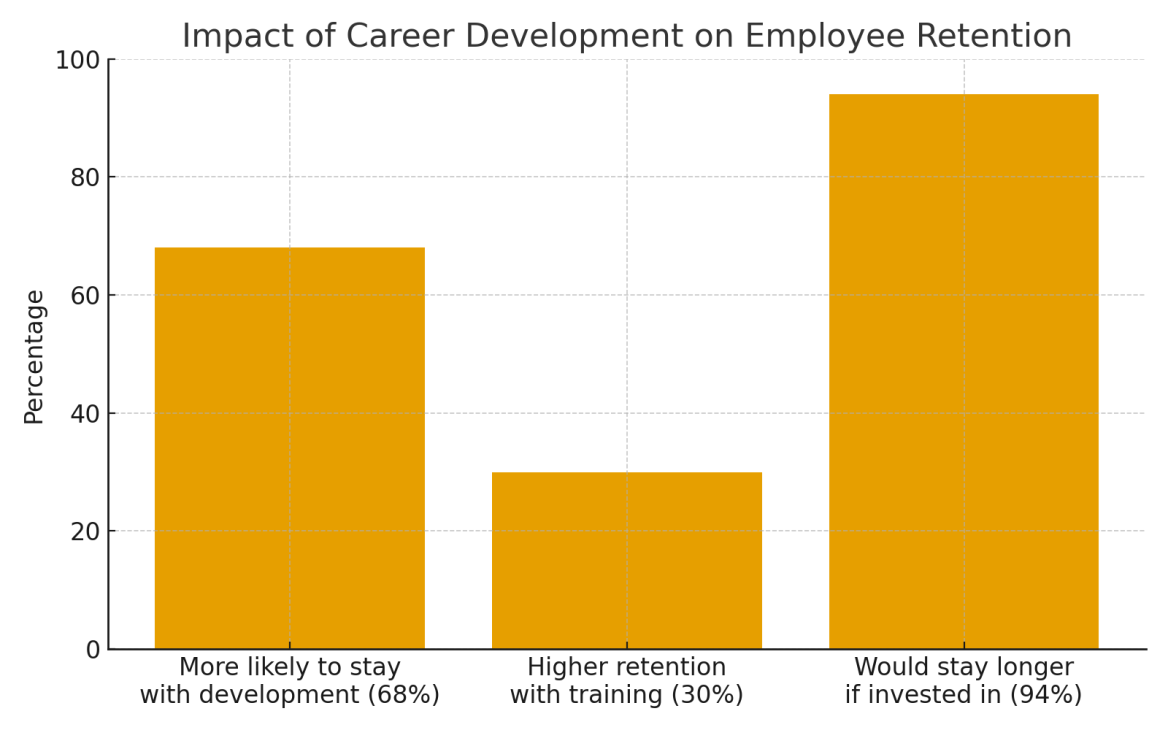
In fact: according to recent data, 68% of employees say they’re more likely to stay with an employer that offers continuous training and career development opportunities, and companies that invest in training tend to have about 30% higher retention rates than those that don’t.
Another survey found that 94% of employees say they would stay longer at a company if it invested in their career development — highlighting just how powerful development and growth opportunities are in influencing commitment.
That’s why we developed our Career Sculpting program — a structured, intentional approach that goes beyond traditional training or performance reviews and instead treats each employee as a person with unique skills, goals, passions, and potential.
Our Story: From Idea to Impact — The Origin of Career Sculpting
The idea for Career Sculpting came to me about 15 years ago after reading an article on retention published in the Harvard Business Review. I realized many companies treated employees as components without individual identities — defined only by their current job description. But people are much more than that.
I envisioned a program that would allow us to get to know employees on a deeper level — not just as “the accountant” or “the technician,” but as full individuals with long-term aspirations, hidden talents, and personal passions.
After a series of brainstorming sessions and strategy meetings with colleagues, we developed the process we now use at EDSI: Career Sculpting. Over the years, we’ve refined the approach — and seen first-hand how it strengthens employee engagement, loyalty, and retention.
What Is Career Sculpting — And How It Works
At the heart of a successful Career Sculpting program is a dedicated team of Career Sculptors — high-performing representatives within your organization selected to serve as liaisons between employees and HR or Talent teams. Their role is to tap into each employee’s skills, goals, interests, and passions, and to help shape a career path that aligns with those — even if that path doesn’t look like a traditional promotion ladder.
Here’s how Career Sculpting works (or can begin to work) inside an organization:
- Designate Career Sculptors — Managers identify high-performing or trusted employees to serve as Sculptors. These individuals are paired with other employees (often via referrals) and act as an ongoing point of contact about career goals and aspirations. This communicates to staff that more people beyond their direct supervisor care about their growth and their future.
- Maintain continuous dialogue — Rather than waiting for annual reviews, Sculptors check in regularly, listen to employees’ evolving interests, and provide guidance and support. This gives insight into strengths, latent skills, and passions that might otherwise go unnoticed.
- Educate on career and growth opportunities — Based on what you learn about an employee’s strengths and interests, explore what their future could hold: training, mentoring, cross-functional projects, shadowing, or other growth and skill-building opportunities.
- Offer cross-functional connections and project opportunities — Even when there’s no official vacancy, Sculptors can help employees contribute to projects or teams that align with their interests, giving them room to grow and new challenges before boredom or stagnation set in.
- Implement a comprehensive Talent Assessment — This could include tools like skills-based testing (for example, the “Skilldex” assessment we use), or broader assessments of how your organization handles Attracting, Assessing, Developing, Retaining, and Sustaining talent. A baseline assessment helps you compare where you stand against best-practice benchmarks, and reveals where you might need to invest more. Check out EDSI's Talent Assessment here.
These steps give you a strong foundation — and where desired, your organization can lean on EDSI to help build a customized, deeper Career Sculpting program tailored to your company’s specific culture and goals.
Why Career Sculpting Works — The Value for Employers (and Employees)
The power of Career Sculpting isn’t just anecdotal. There’s robust evidence that when organizations prioritize career development, training, and personalized growth — retention improves significantly, employee engagement rises, and long-term commitment strengthens.
Employees who believe their company invests in their development are far more likely to stay: 94% said they’d be more inclined to stay longer when they see an employer’s commitment to their growth.
Organizations with strong learning and development cultures can see retention rates 30–50% higher than those without such a culture. (Source)
By retaining employees longer, companies save on the considerable costs associated with turnover — including recruiting, hiring, onboarding, lost productivity, and loss of institutional knowledge. The cumulative effect of better retention, internal mobility, and skill development often results in stronger performance, organizational stability, and a more loyal workforce.
Beyond cost savings, Career Sculpting fosters a sense of belonging, purpose, and alignment. Employees feel seen, heard, and valued — not just for what they do today, but for who they are and what they can become. That creates loyalty, enhances culture, builds teams, and reduces turnover.

How to Begin — 5 Steps to Launching Career Sculpting in Your Company
If your organization is ready to start investing in people — not just tasks — here are five actionable steps to begin:
Select and appoint Career Sculptors — Choose trusted, high-performing individuals to act as liaisons between employees and HR/Talent teams.
Set up regular, meaningful conversations — Establish communication rhythms beyond annual reviews to explore employees’ goals, interests, and potential.
Offer visibility into growth paths — Provide training, mentoring, job-shadowing, or cross-functional projects that match each employee’s strengths and passions.
Create opportunities for internal mobility and project involvement — Even without formal openings, look for ways to engage employees in new tasks or challenges aligned with their interests.
Conduct a Talent Assessment — Use or build a tool (like “Skilldex”) to evaluate where you stand across Assessing, Attracting, Developing, Retaining, and Sustaining talent — then build a plan based on that baseline.
These steps form a strong foundation. And with support from a partner like EDSI, you can dig deeper to build a comprehensive program — customized to your unique culture and long-term goals.
Why It Matters — The Bigger Vision
When employees feel heard, challenged, and supported — not only professionally, but personally — they’re more likely to stay. That’s better for culture, for long-term stability, for relationships, and yes — ultimately for the bottom line.
With Career Sculpting, you don’t just build roles — you build futures. You build loyalty. You build a workforce aligned with your company’s purpose — and with their own. And in today’s competitive labor market, that kind of commitment can set your organization apart.
Interested in Learning More?
If you’re curious about bringing a Career Sculpting program to your organization — or want to explore what it might look like for your team — reach out using the form below. One of our team members will be in touch to discuss how we can help you design and implement a program tailored to your needs.